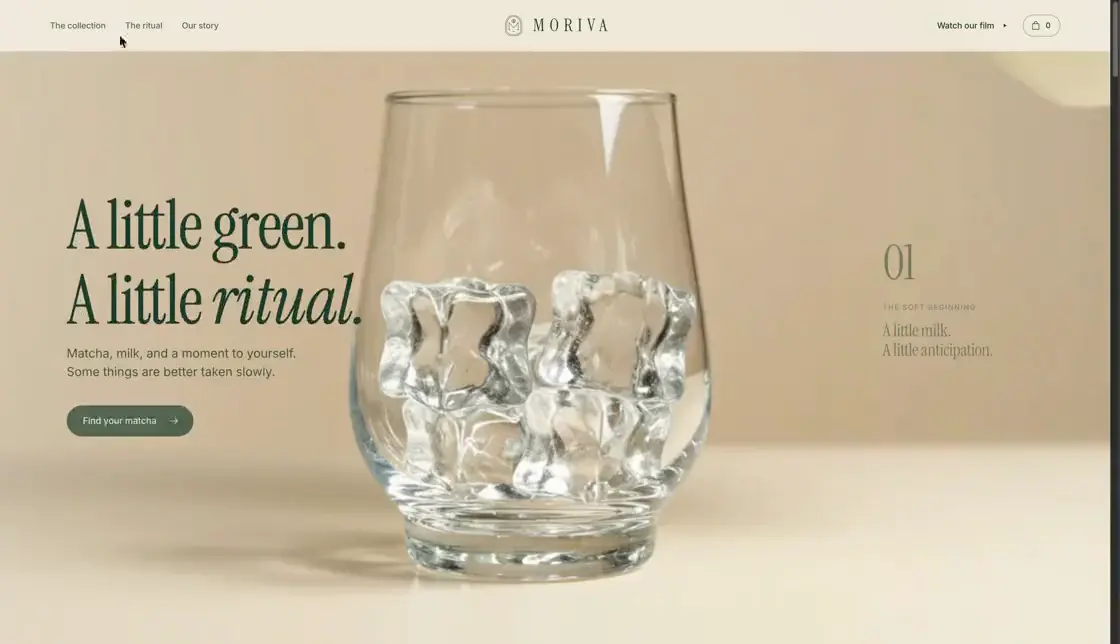
A startup landing page has one job: get the right visitor to take one action, such as joining a waitlist, starting a trial or booking a demo. Every section either helps with that or should be cut.
The sections, in order
| Section | What it has to do |
|---|---|
| 1. Headline and button | Say what the product does and who it is for, in one sentence, with the one action next to it |
| 2. Product picture | A real screenshot or short recording, so people see what they would get |
| 3. The problem | Describe the pain in the visitor's own words |
| 4. How it works | Three steps or three main features, each with its benefit |
| 5. Proof | Customer quotes, logos or numbers you can back up. If you have none yet, leave this out |
| 6. Pricing | Plans and prices, or a clear line on how pricing works |
| 7. Questions | The four or five objections that stop people signing up |
| 8. The button again | The same action, repeated at the bottom |
Write the headline last
The headline is the hardest sentence on the page. A useful test: could a stranger read it and tell a friend what the product does? "The all-in-one platform for modern teams" fails. "Send invoices and get paid in two clicks" passes. Write the rest of the page first, then come back to it.
One page, one action
Choose a single action and repeat it. A page that offers a trial, a demo, a newsletter and a download asks the visitor to decide four times. Before launch, the action is usually a waitlist. After launch, it is a trial or a demo.
What to leave out
- A long company story above the product
- Features nobody has asked for yet
- Testimonials or numbers that are not real
- A navigation bar full of links that lead away from the page
- Animation that delays the first screen
Before the product exists
You do not need a finished product to have a landing page. A page with a clear promise and a waitlist tells you whether people want it, which is the point of the MVP-first approach I describe in my process for building a SaaS product.
Which tool to build it with
For a landing page I usually suggest Framer. It is fast to design and change, which matters because a landing page should be edited often in its first months. If the page is part of the product itself, with logins and a dashboard behind it, build it in Next.js with the app. The Framer vs Webflow vs Next.js guide goes through the choice.
How to tell if it works
- Count one number: of the people who visit, how many take the action.
- Change one thing at a time, starting with the headline.
- Talk to the people who signed up. Their words belong in the next version of the page.
Need a landing page, or the product behind it?
I design and build landing pages in Framer and SaaS products in Next.js. Tell me what the product does and where it is now.

About the author. Kenil Vaghasiya is a freelance full stack web developer, Framer developer and designer with 5+ years of experience building web applications with React, Next.js, Node.js, .NET and Azure. He works remotely from Surat, India. More about me · Services